Salt marshes as ecosystem-based coastal protection elements
The focus of sub-project 4 is on the development of measures to protect salt marshes in order to preserve them as an ecosystem-based coastal protection element and biotopes that are particularly worthy of protection.
Historically, salt marsh groyne fields were built in front of the main dykes primarily to create agricultural land. Over the last few decades, the main objective of groyne construction has changed considerably: Today, as an ecosystem-based coastal protection element, salt marshes form an essential component of the coastal protection system on the mainland coast of Lower Saxony. In addition, they are particularly valuable and strictly protected biotopes in the Wadden Sea National Park and form CO2 sinks. Against the background of rising sea levels, the natural potential for natural salt marsh formation will be significantly reduced and the risk of erosion of existing salt marshes will increase due to increased exposure to currents and swell. Sustainable, supportive, innovative and site-adapted technical measures to reduce swell and currents are required to enable salt marsh formation and protection under these changing conditions.
In this sub-project, technical realisation options are being investigated and further developed in order to sustainably realise salt marsh formation and protection. The aim is to vary and optimise the functionality of different construction methods using natural materials and to develop and evaluate innovative, site-adapted constructions based on an expanded understanding of the interaction between the structure and the forces acting on it. Model tests and supplementary field investigations form an essential basis for this.
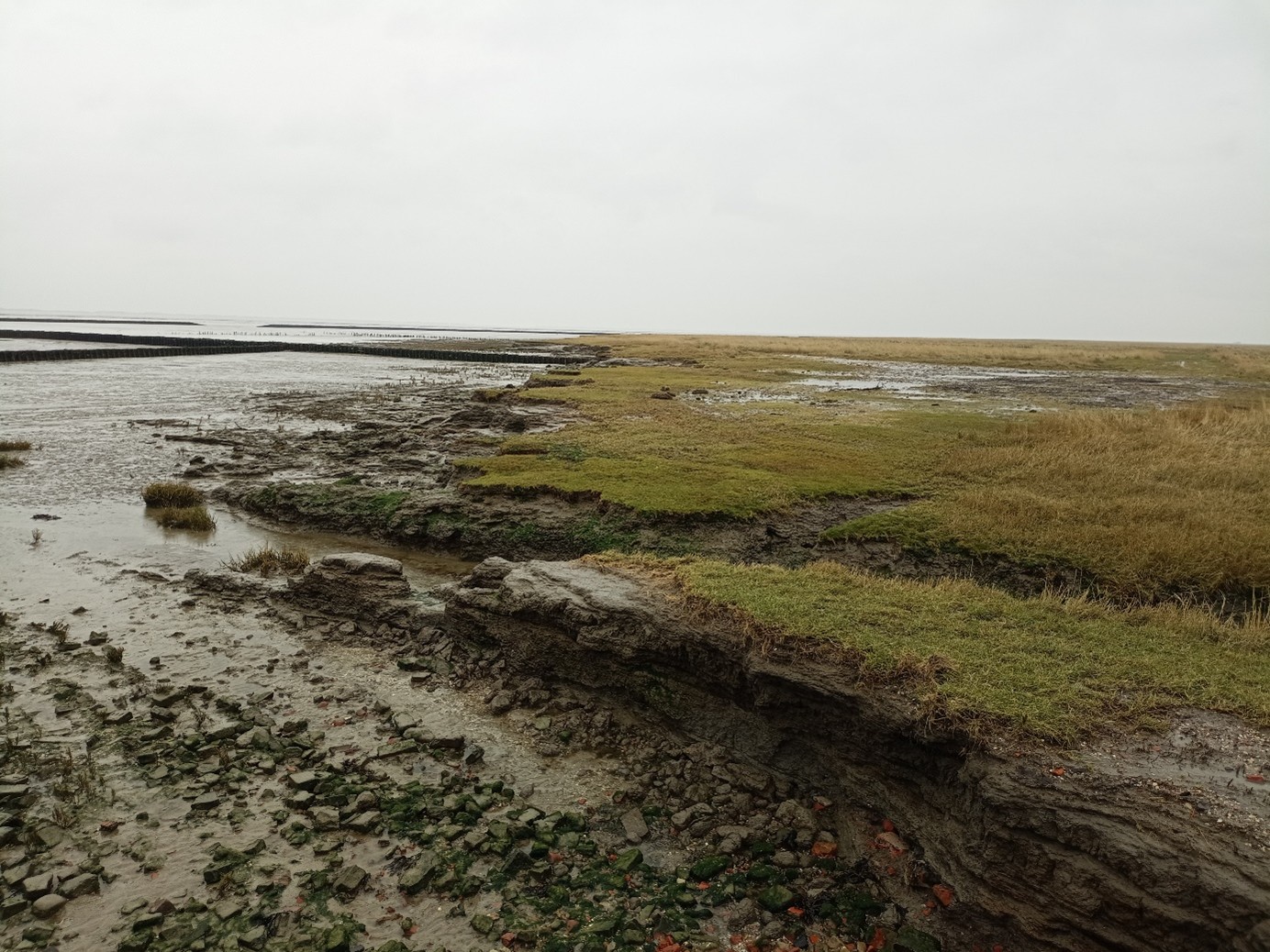
Salt marsh cliffs at Hilgenriedersiel (Henrike Rodermund/NLWKN)
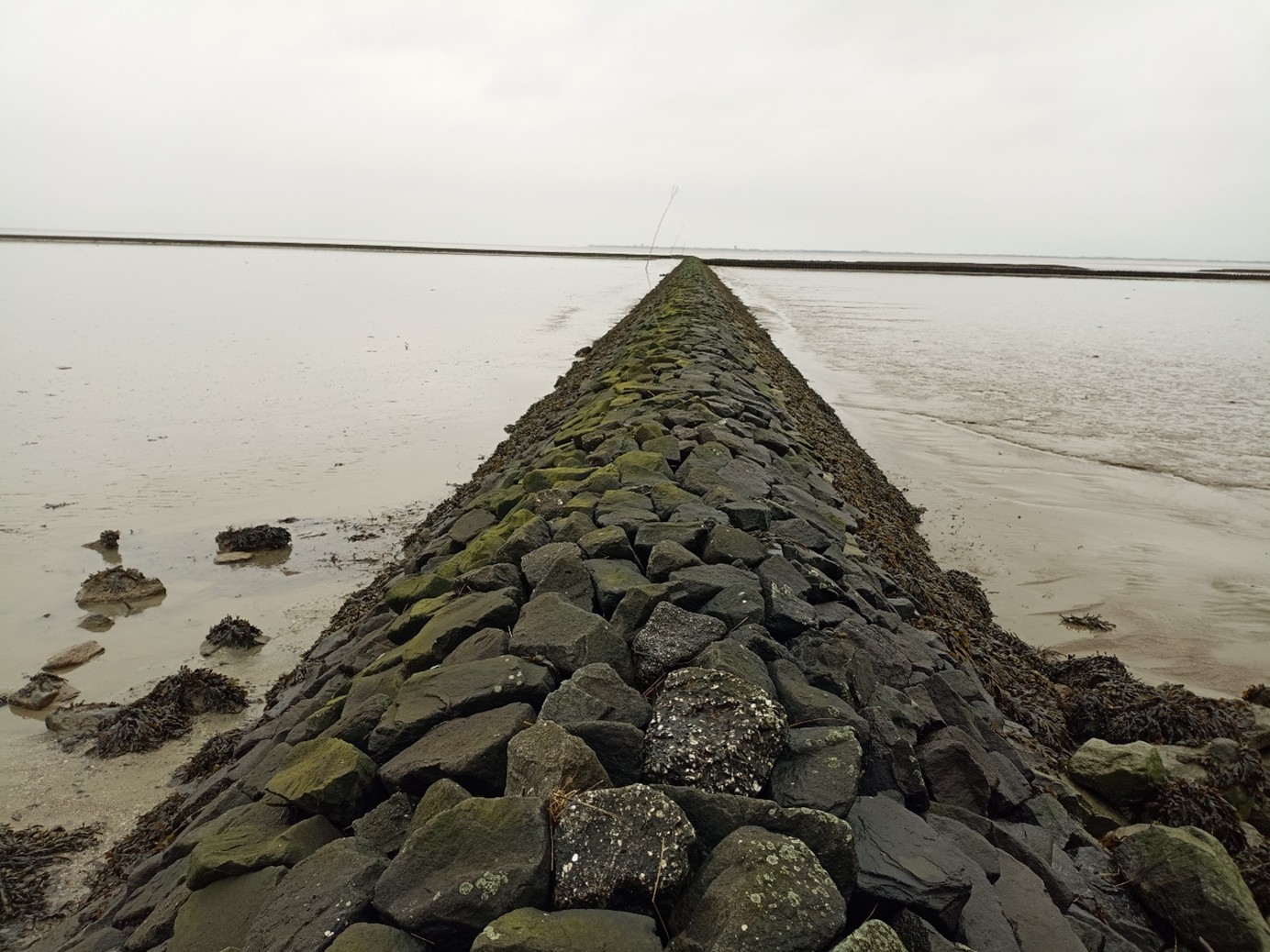
Stone groyne in a classic groyne field east of Norddeich (Henrike Rodermund/NLWKN)
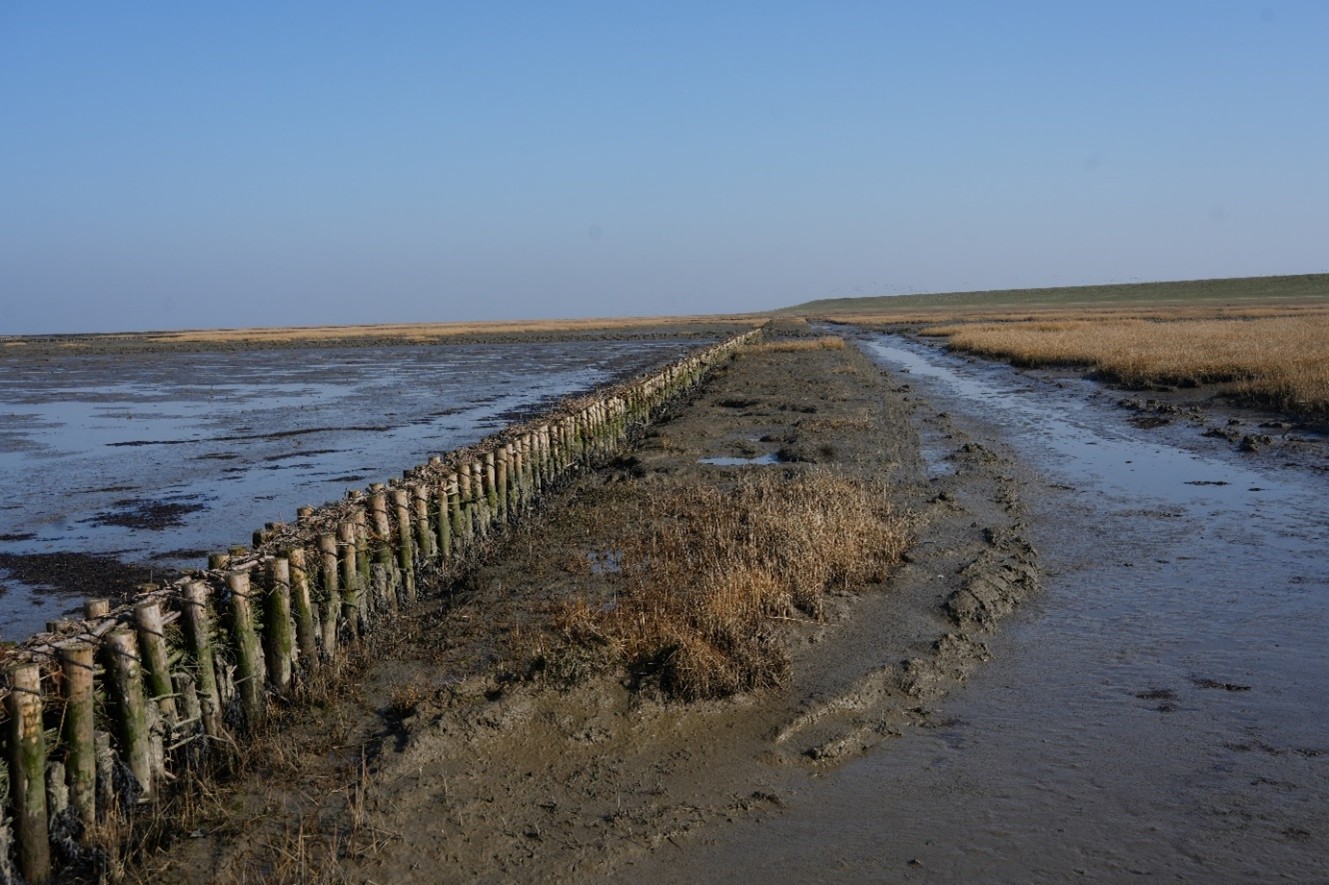
Brushwood groyne in front of salt marsh (Henrike Rodermund/NLWKN)
Main aspects:
Conservation of salt marshes as an ecosystem-based coastal protection element and valuable habitat
Reduction of salt marsh decline and promotion of salt marsh formation
Development and investigation of physical substitute models to determine the hydrodynamic effect of louvres as protective structures
Development of an optimised design for the protective structures
Implementation of the findings in a test field equipped with measurement technology on the coast